
Welcome to 2026, the year of the fire horse. A year where speed is king, attention spans are shorter than eyelashes, and LLMs help humans ‘humanize’ writing.
Quite interesting times we live in, innit?
When I wrote this article on the negative effects of social media six years ago, I did not know that the future had many more technological wild cards in store for us. While there are many phenomena unique to the modern world that are worth exploring, I want to focus on the invention that has been as revolutionary as fire:
Artificial Intelligence.
Genesis 1:27 tells us that we are imago dei, created in the image and likeness of God, a concept theologians have said points not to our physical manifestations but to our cognitive and creative capabilities. With artificial intelligence, man has exhibited the same godlike creation ability, creating something capable of intelligence, an imago humano, if you will. Its only flaw—and some might term it a major advantage—is that it cannot feel/emote. However, it can think, write, doubt, draw, create, manage, supervise, compare, humor, entertain, predict, calculate, theorize, etc.
Like every invention, AI has been getting its 15 minutes of fame…on a loop. From social media and Op-Eds to LinkedIn articles and in-person discussions, everyone is talking about AI and what its existence means for humanity.
Would it create new jobs, or would it just render all of us jobless?
Is it really good at writing/art/coding/animation/movie production, etc., or is it just hype?
Is it making us dumber and lazier, or is it improving productivity and efficiency?
Are some sectors immune to the AI-infestation, or are we all doomed?
What impact will it have on the younger generation’s creative and psychosocial development?
Would it take over the world as we see in dystopian films and novels?
The list is endless. The only other subculture that gets more airtime than AI is Gen Z’s, but I digress. While we are asking very valid and salient questions, I believe we are neglecting the most important question of all.
What does AI represent?
Simple: An end to gatekeeping.
Using AI is like chancing upon a superpower, like finding a genie that grants infinite wishes with just a prompt. Previously, creative endeavors were exclusive, carried out by a few talented individuals who had honed their expertise over time. We studied and interviewed these virtuosos ad nauseam, asking about their creative process, what inspires them, and their morning routine, all in a bid to hack creativity. To find that unique combination of habits, processes, and inspiration that would give us the same result.
With AI, the barrier to entry is decimated. Anyone with a device, an internet connection, and the ability to arrange words into a prompt can call themselves a creative. Now, there is no need to learn color theory or light and shading before creating artwork. There is no need to study story structure and writing devices to create a poetic piece of writing. There is no need to learn the fundamentals of coding and create a ‘Hello World’ code script before. With AI, the (creative/art/science/tech) world is literally at your fingertips. You can write lean, introspective prose like Tolstoy or in Ocean Vuong’s rich, decadent style. You can create cozy Ghibli-style images like Hayao Miyazaki or Disney’s characteristic dreamy-eyed characters. You can build websites from scratch with a Claude subscription, even if you have no prior knowledge of web development. The sky’s the limit.
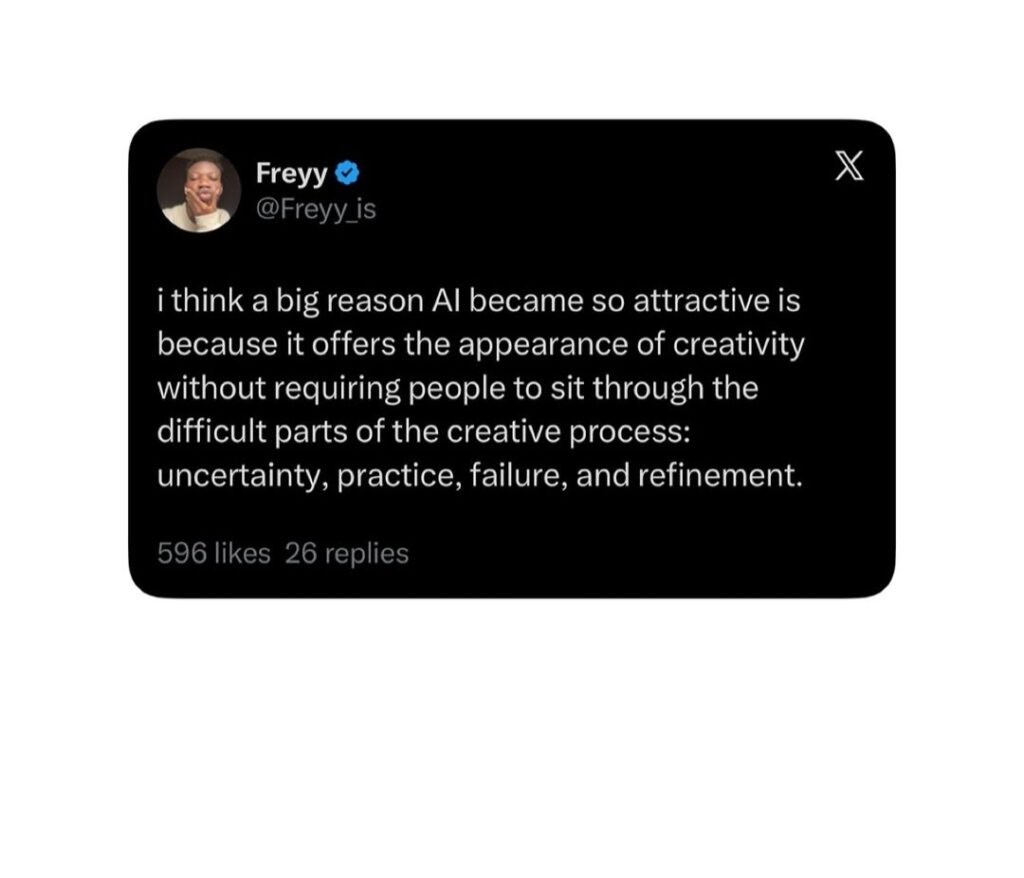
‘AI is useful precisely because it decouples output quality from the slow, demanding work of verification. You don’t need to consult a primary source, triangulate between perspectives, or sit with the discomfort of not yet knowing…’
However, this democratization of creativity has its disadvantages.
The Shadow Sides of the Fast-Fashionification of Creativity
- The undervaluation of process
First, it teaches us to favor product and productivity over process. With creative enterprises, the ‘means’ is as important as the ‘end’. Creativity is as much about process as it is about product. The spark of an idea, the excited notes you make as the idea takes form, researching, supporting, and contrasting ideas, sitting with uncertainty before finally coming to a satisfactory conclusion…all these are as important—dare I say more important—than the finished product.
Why?
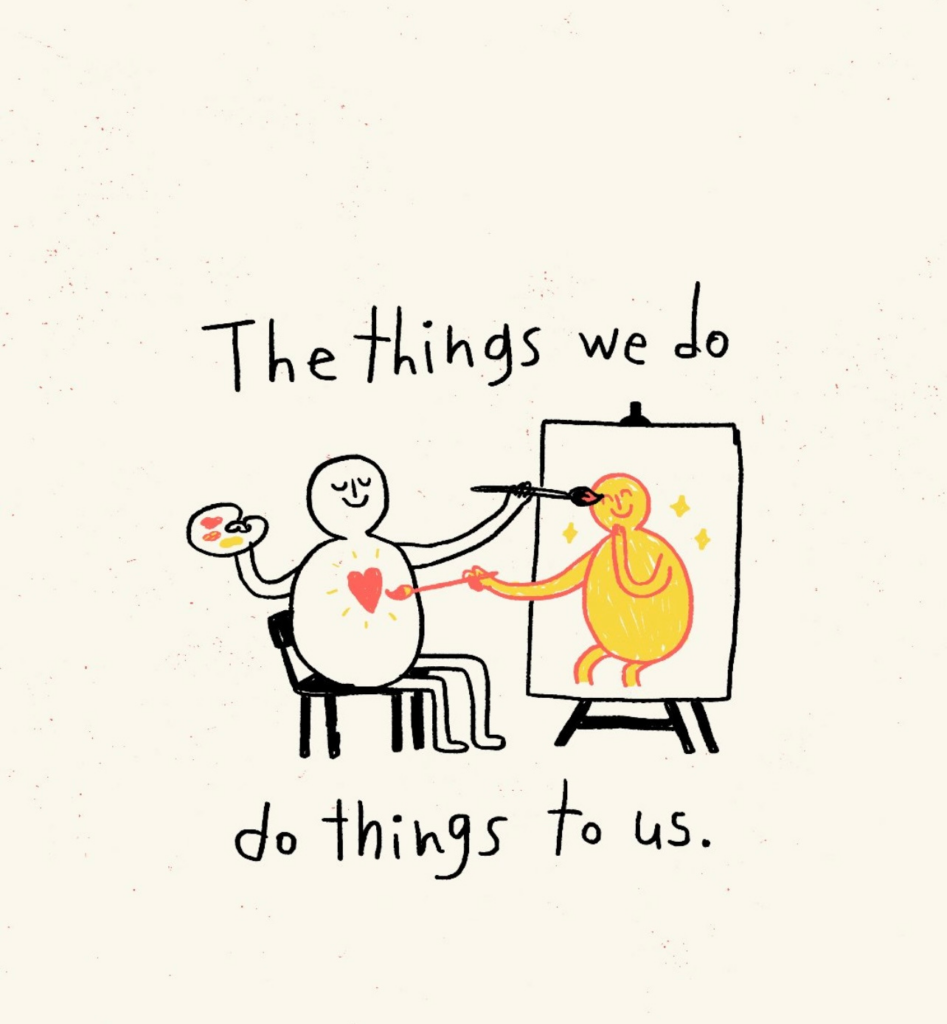
Because the process does things to you. The skills, abilities, and capabilities you acquire while creating the project/book/film/art/business/website make you someone who can create better iterations of the product later on.
One argument that people often parrot in support of AI and its productivity-enhancing abilities is the erasure of the unknown. You know that pencil-biting stage where you hit writer’s block or study two gems of an idea, wondering how they connect. Now, we have a chatbot spirit guide that makes the unknown known and connects those ideas for you. This is not a bad thing per se. Nevertheless, the process of sitting with uncertainty before chancing upon a solution strengthens problem-solving abilities. We are so hyper-focused on productivity, entertainment, and metrics-driven output that contemplation feels indulgent. However, it is in stillness that clarity emerges. The serendipity occasioned by contemplation is still an important aspect of all endeavors, be they creative or scientific.
In his Substack article, Steven Johnson outlines seven types of serendipity:

- The Messy Desk or the Fleming Maneuver: where an observer changes upon a discovery while contemplating a disordered environment, thus giving a new perspective to the statement ‘there is a method to madness.’ A very good example of this is Scottish scientist Alexander Fleming, who discovered penicillin while observing mold inhibiting bacterial growth after returning to a messy lab following a two-week holiday.
- The Swerve in the Stacks. With this, wandering off the beaten path helps you arrive at your intended destination. The name originates from the heyday when libraries were the major source of research materials. People would comb through the stacks looking for a specific book, only to stumble on a different book on a nearby shelf that was surprisingly relevant, for, as Johnson puts it, an unanticipated reason. Another great modern example is following hyperlinks and stumbling upon an article that provides new context for an idea you’re working on.
- The Post-it Note Epiphany. Here, the search for a solution to one problem often leads to the discovery of a solution to another. Great examples of this include: 1.) Chinese alchemists discovered gunpowder in the ninth century while working on an immortality potion, 2.) Viagra (Sildenafil) moving from being a treatment for hypertension, angina, and other symptoms of heart disease to a popular treatment against erectile dysfunction in 1998, and 3.) The 3M scientist Spencer Silver, who, in trying to invent a super-strong adhesive in the late 60s, accidentally concocted the exact opposite: a weak adhesive that would allow you to attach and re-attach a piece of paper in different places, ultimately giving rise to Post-It Notes.
- Brilliant Mistakes:…or Happy Accidents. Here, imperfections, mistakes, and errors lead to the creation of something phenomenal and inspired, e.g., Bavarian physics professor Wilhelm Röntgen accidentally discovered X-rays while experimenting with cathode-ray tubes. Röntgen called the radiation rays “X-rays,” with X signifying something unknown. Another example of this is genius composer Lin-Manuel Miranda accidentally looping a random fragment of a measure in the verse of the song ‘Dear Theodosia’ in the music software program Logic Pro. This produced a new melody, and he loved it so much he ended up building the whole “My father wasn’t around” bridge to that song around the looped fragment.
- New Neighbors: We’ve all experienced this. You go on a vacation or to your village/country home, and suddenly, everything—the sea, the skies, the flowers, the food stalls—seems to be speaking to you. With this kind of serendipity, changing your location changes your perspective and allows you to encounter new knowledge. A great example of this is the 18th-century chemist Joseph Priestley, who invented soda water after moving next door to a brewery and becoming interested in the strange vapors emanating from the brewing vats. The discovery ultimately won Priestley the Copley Medal and revolutionized the beverage industry.
- Exaptation: In evolutionary theory, exaptation is a situation in which a feature that evolved for one purpose becomes useful for another. In nature, we see this with penguins: their wings, which evolved as adaptations for flight, were co-opted as flippers for swimming. In the realm of ideas, we see this with:
- Gutenberg co-opted the screw press used by winemakers, adapting it to printing and leading the publication of Bibles at the time.
- Listerine moved from being a 19th-century surgical antiseptic, then a cure for gonorrhea, a foot hygiene product, a floor cleaner, a dandruff treatment, and a cure for colds before becoming a household dental hygiene favorite in the 1920s.
- Botox, which was first used to cure crossed eyes and combat botulism, was found to have an unusual side effect—the erasure of wrinkles.
Evolutionary psychologists like Stephen Jay Gould even theorize that human traits such as metacognition, complex thought, the arts, writing, calculus, and poetry are exaptations. Our brains, they argue, are very functional structures that evolved to navigate complex social hierarchies in the wild, and these abilities were co-opted to process, create, and study fine arts, mathematics, and the humanities.
- Slow Hunches:…or the Thunderbolt: This is the textbook version of serendipity, and it occurs when an idea seems to come out of nowhere. Great examples of this include Newton perfecting his theory of gravity after observing an apple fall from a tree and Archimedes perfecting his principle of flotation while soaking in a bath.
So how does AI fit into this?
It doesn’t.
It erases the space and contemplation that allow serendipity to occur. The Nobel laureate, Thomas Schelling, puts this in context when he says:
“One thing a person cannot do, no matter how rigorous his analysis or heroic his imagination, is to draw up a list of things that would never occur to him…”
The bulk of creative and imaginative thinking is finding ways to trick your brain into coming up with ideas that never would have occurred to you. Yes, you can read, study, and discuss your way into new ideas. However, for some ideas, space and contemplation are all you need. Space and contemplation help the idea incubate before bisociation—the connection of previously unrelated events, skills, or information—can occur.
Inspiration is a winding path, and to navigate it, we have to wonder, and wondering is wandering. Without the serendipity that comes with wandering, we would probably not have X-rays, the theory of gravity, Vaseline, the flotation principle, cosmetic Botox, Viagra, penicillin, or gunpowder. Optimization is good. Productivity and measurable output are amazeballs. But serendipity, which is often occasioned by letting our minds wander or sitting with and stewing in uncomfortable uncertainty, is a million times better. With AI, the winding path is erased and replaced by a smooth stretch of tarred road, perfect, smooth, but leached of soul.
- The proliferation of AI slop
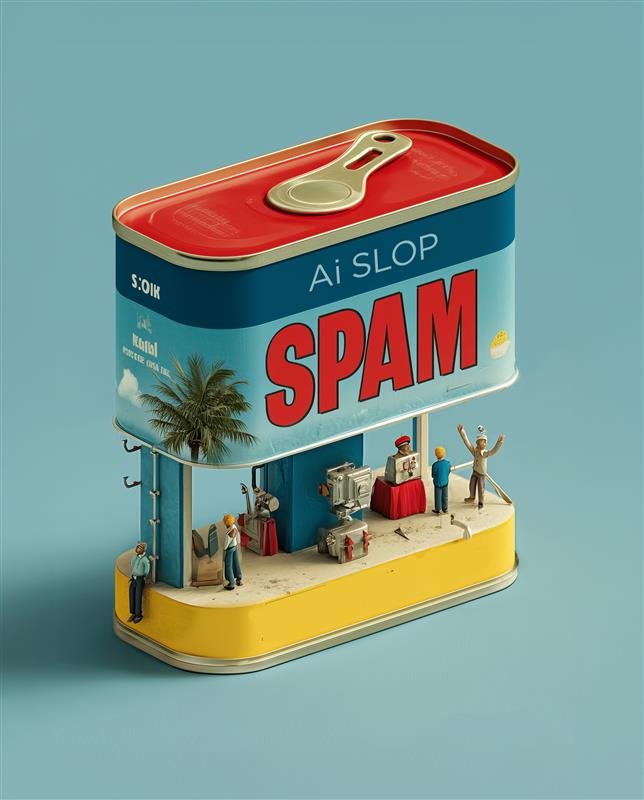
From unfaithful anthropomorphic cats and caricatures of The Lord’s Chosen Church to videos of loquacious babies, catwalking presidents, and indescribably ridiculous cooking videos, AI has shown us in real time that a tool is only as powerful and as useful as its wielder. LLMs, artificial intelligence, and associated technologies have been described as the most impactful invention since fire. We should be using it principally to advance mankind and break the limits of possibility. But no, this is what most people use it for.
When something becomes democratized and ubiquitous, it loses some—if not most—of its value. Yes, creativity is now (kind of) accessible to everyone, but people are misusing it to create fast-food-esque content. Every bit of creative content feels middling, forgettable, and flaccid. We are now in what internet theorist Daniel Keller has termed “the age of sloptimism,” a culture where content is superficial and the potential for virality supersedes value and impact. When reading blog posts, Substack and Medium articles, and even tweets, you can see obvious markers of AI. Everyone sounds the same with their ‘quiet power’ and ridiculous metaphors. People are churning out content faster than a Chinese sweatshop churns out polo tops for Temù—and people who still create content organically are forced to keep up with the pace.
3. Use It or Lose It
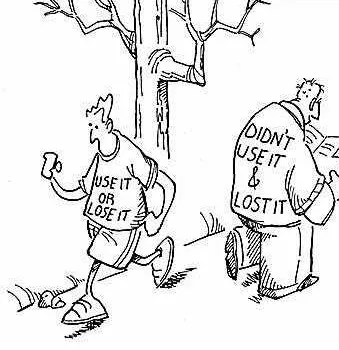
Objects operate under a very simple premise: the more you use them, the more they depreciate and the less valuable they become. Gadgets weaken with use, wigs sag and slacken with multiple wears, and bags crack and fray after one too many outings.
But the human body operates under a very different set of rules. With us, the opposite is the case. The human body operates a tightly regulated ‘Use it or Lose It’ principle. The more you use a body part, say your muscles, the stronger and better it becomes. This adds a very interesting dimension to the whole body count discourse, but that’s a story for another day.
Where was I again?
Yes, muscles.
This ‘Use it or Lose it’ principle is why you become stronger each time you go to the gym. Your muscles are in a constant state of adaptation, building increasing strength with each progressive overload. The fat melts, your body becomes toned, and you carve abs that can grate cheese and cut self-esteems. On the flip side, if you decide to quit the gym and abandon the active lifestyle completely within a few years…dare I say months, your body softens, you lose your mobility, and 10-pound weights become heavier than the generational trauma your parents handed you.
Outside fitness and the gym, there are multiple examples of this theory of use-mediated value. If a thirty-year-old who has been walking all their life were to enter a coma for a month, they would need physiotherapy to walk again. That’s how fast the leg muscles atrophy. The same applies to the vagina. If it hasn’t been visited (coughs) in a while, it loses elasticity, temporarily in premenopausal women and permanently in postmenopausal women.
The brain, with all its executive functions and self-analysis, is not above the program.
And herein lies the primary danger of AI.
Like every muscle in the body, your brain becomes stronger the more you use it. It’s like a feedback loop. The more ideas it parses or generates, the better it becomes at generating, parsing, and daisy-chaining ideas. Think of it like walking a path in a dense forest. The more people tread a path, the more defined it becomes and the easier it is to use. AI tools hijack this mechanism. By outsourcing ideation and creation to AI, these ‘neural paths’ are abandoned; they become overrun by weeds and rendered unusable with time. Now, crafting emails, writing copy, designing a character, or describing a scene in your book becomes a struggle without the help of Claude, ChatGPT, or Gemini.
Using AI as a trusty assistant or a tool for swift, preliminary research is fine. However, when we outsource critical thinking and problem-solving to it, we risk intellectual atrophy. We are already seeing the effects now. People cannot think beyond AI overviews. Ask someone if they’ve done research, and they proudly declare they’ve asked ChatGPT. Some even go a step further to tell you they’ve asked Claude instead, as it is more accurate and way more advanced. Researchers at the University of Pennsylvania have termed this intuition-overriding, unquestioning belief in AI outputs cognitive surrender.
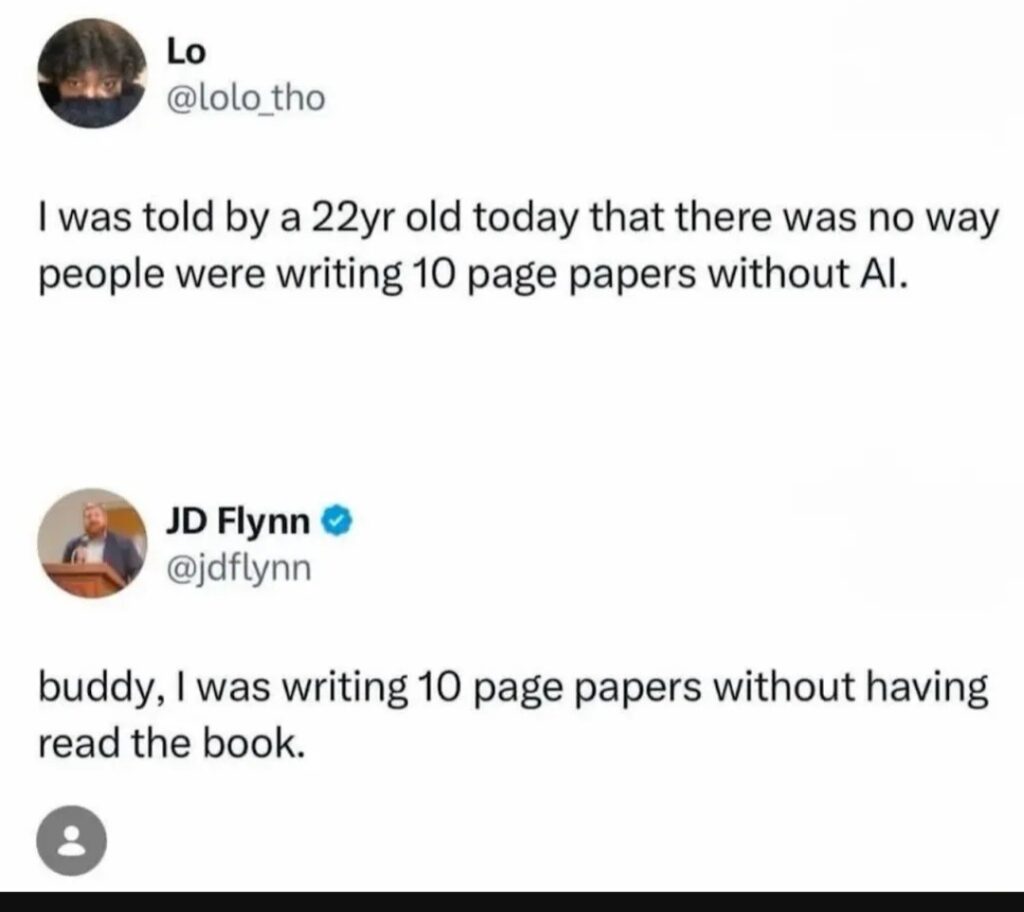
Studies have also shown that students are forgetting content more easily due to increased reliance on LLMs, a phenomenon often termed cognitive offloading, epistemic atrophy, or the Google Effect. With this, LLMs and the internet serve as external memory that they refer to when they need information, thereby decimating their ability to retain and recall information and ideas. Further studies have also shown that AI use erodes cognitive and critical thinking skills, reducing brain activity by up to 55%, a pattern that persisted for months after the initial research. Amidst these, people now doubt the human ability to do things we used to do effortlessly not too long ago.
And this brings me to the fourth, and most discussed, disadvantage of AI.
4. The AI Witch Hunts
What is that question that can either be a compliment or an insult?
Answer: Is this AI?
I have seen this question across social media comment sections and in response to specific works of art. When an ethereally beautiful person posts a picture, people duke it out in the comments, arguing about the authenticity of the account owner, pointing to things like perfect facial symmetry and warped walls as markers of AI. Conversely, when a picture is exceptionally bizarre, AI allegations rise like smoke once again. The whole thing is reminiscent of people with natural hourglass figures getting BBL allegations.
And you don’t blame them.
Just like people get BBLs and begin selling 21-day workout plans, AI is slowly becoming the new filter. In benign cases, people use AI tools to touch up their appearance for a classy, polished look. In more insidious cases, they create an entirely different persona with it and operate an account under that identity. As our perception of reality gets warped, we question everything. Smart-mouthed toddlers have always been a regular phenomenon on shows like the Steve Harvey Show and the Ellen DeGeneres Show. However, with AI doing the most, when we see babies smart mouthing, our knee-jerk reaction is doubt, not amazement.
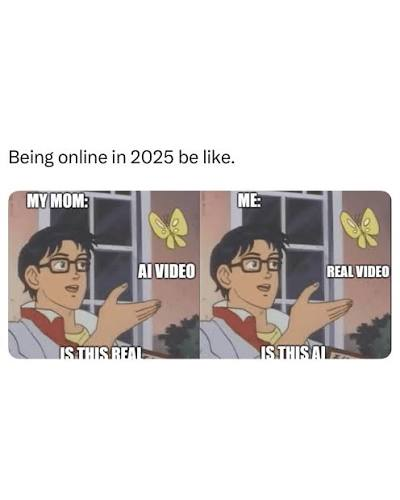
The art world is not excluded from this.
Previously, competitions were primarily an exercise in separating phenomenal works from bad or average works. However, now, a fourth category—AI work—has stepped onto the stage. And just like human-created work, it can be objectively bad, average, or phenomenal.
A few weeks ago, I served as a reader for a competition hosted by a popular publisher. I had to read through 19 stories and choose the top five. Besides eliminating human-written stories that were objectively bad, I observed that eight entries had AI fingerprints. I know there is a hesitation in literary spaces around AI markers and tells, as these so-called tells have been used by human writers since time immemorial. However, AI has a distinct writing voice, a unique way in which it arranges its thoughts, theories, and ideas—and this style/voice persists even when it is attempting to copy someone’s voice.
This May, the entire publishing world was thrown into a furore by the publication of a story in Granta. The story was one of the shortlisted entries for the prestigious and renowned Commonwealth Short Story Prize. This prize was/is the holy of holies in the literary world and a gateway (for most writers) into the dazzling world of traditional publishing. However, the ruckus over this work clearly shows that AI has shifted the tectonic plates of the literary world, and we are not well-equipped to handle it. The story ‘The Snake and the Grove’ by Trinidadian writer Jamir Nazir was accused of being AI-generated. Honestly, when I read the work, vast swathes of it (especially the befuddling metaphors) were giving GPT:
They called her Zoongie. Maybe it was a name; maybe rain took a shape and decided to keep it. She had the kind of walking that made benches become men.
Marsha lived two bends down. If the village had a mouth, it was hers. Big in the way of women who never apologise to furniture, she had a laugh that shook dust from joists and a voice that could soften to coax a child from a ledge.
Sun on galvanise is a cruel instrument. It beats until the roof talks back in a dry moan. The day the grove began to remember, the roof over Vishnu Mohammed’s shack groaned like a drum-skin too tight for the heat. Inside, air clung thick as porridge skin.
You get the point now? Entire paragraphs of circumlocution and purple-prose-heavy, pretty nothings.
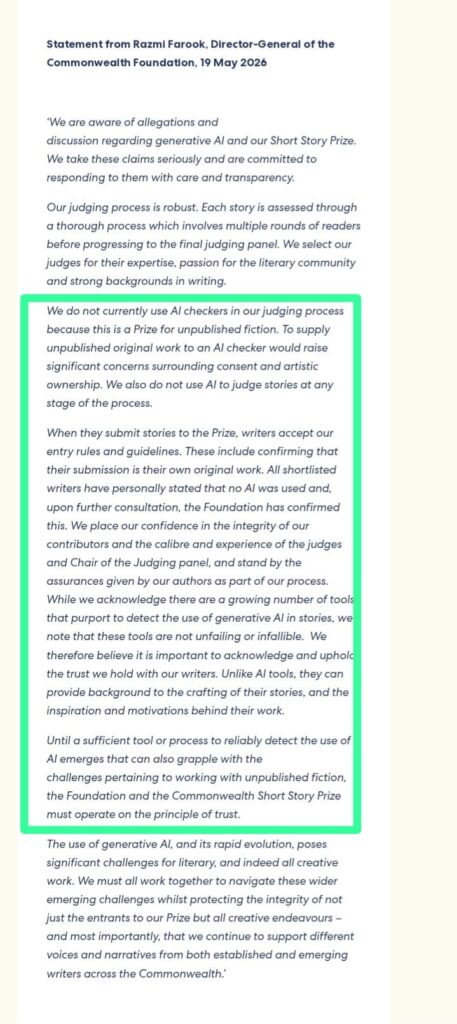
The literary world was divided. Some insisted the work was obviously AI-generated and warned that this, if not dealt with decisively, could have serious implications for future editions of the prize and the literary world in general. Others took a more empathetic approach, saying that AI witch-hunting never ends well, as AI, after all, was trained on human writing. This second group believed that if we keep at this, we risk an AI mirage, with books written without the help of AI being accused of being AI-generated because of supposed AI tells. Some people were not worried about the reactions of the involved literary bodies—Granta and the Commonwealth Short Story Writing Prize—whose reactions were practically a shrug and an ‘oopsie.’
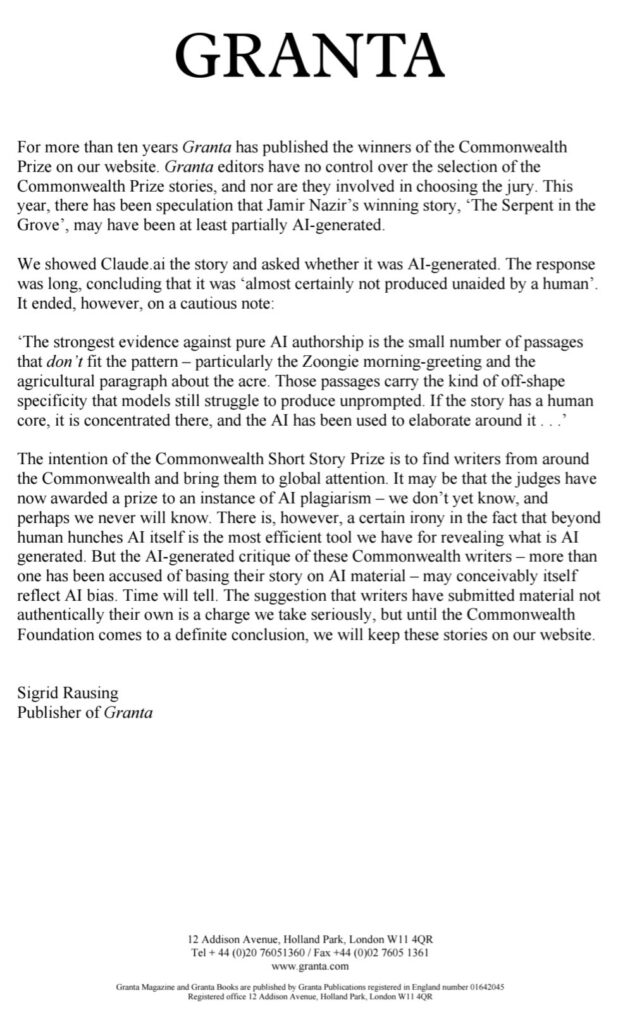
The Commonwealth Short Story Prize responded with this:
It is funny how a lot is said about voice and tone in literary spaces, but when it comes to AI discourse, it is conveniently ignored. Authorial voice is a writer’s peculiar and identifiable style or “personality” on the page. It is the cumulative effect of a writer’s word choice (diction), sentence structure (syntax), tone, and perspective. I like to think of it as a unique writing fingerprint, the markers of our literary genetics.
When people start writing, they often attempt to sound or write like other celebrated writers. However, with time, they, too, come into their own writing voice. As a young writer, I was obsessed with writing voices. Some days, I wanted to write like Chimamanda Adichie. On other days, I wanted to adopt Rowling’s simple yet vivid prose. I read far and wide and tried my hand at the writing styles of different authors. However, when I stopped writing (primarily) as a form of escapism and became more intentional about learning the craft of writing, I discovered the concept of the authorial voice and decided I wanted to find mine. I knew it would not be easy to discover, but I was prepared to try. And try I did.
UUUUNNNTILLLLL
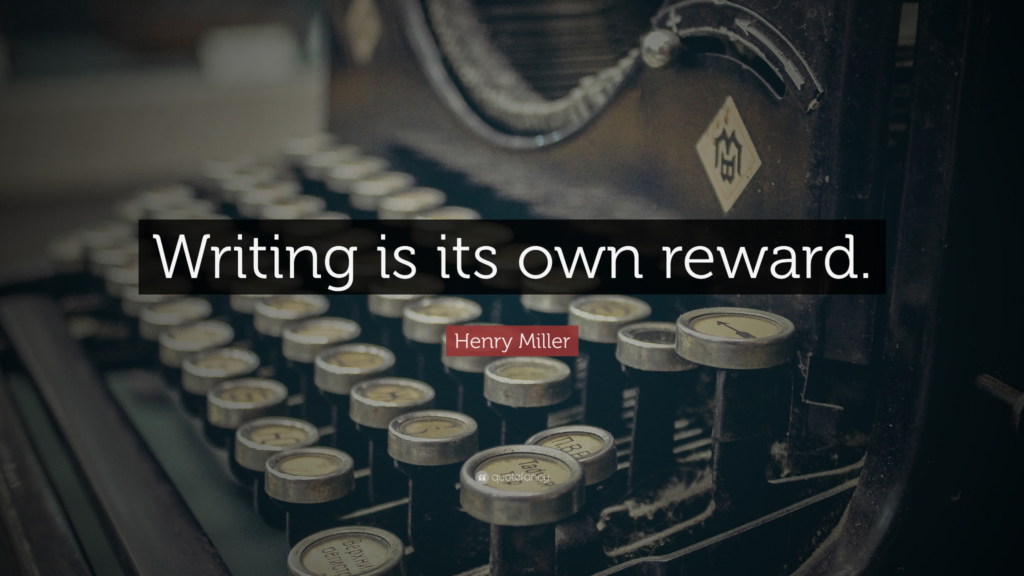
I saw this quote by Henry Miller:
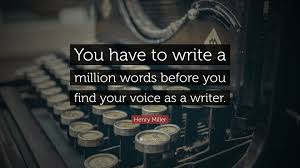
At that point, I gave up trying to find my writing voice and focused on enjoying the writing process and just writing as much as I possibly could.
But back to AI.
When sleuthing for AI-generated stories, people look out for certain ‘tells.’
The excessive use of the adjective ‘quiet’ (e.g., a quiet unraveling, a quiet longing, breaking quietly)
The rule of three
It’s not X; it’s Y. (e.g., This is not fear, it is acceptance)
Or the em dash.
I actually roll my eyes at the last one, as I have been abusing that punctuation mark long before AI trundled along. Unfortunately, these superficial tells are not enough to determine if a work is AI.
The major indicator is voice. Human writers have very distinct writing voices, both communally and individually. Postcolonial African writers employ grandiose modes of expression, possibly because bombastic vocabulary was a marker of learnedness back then. Modern writers favor lean prose and readability, using as few words as possible to convey a breadth of ideas. AI, just like human writers, has a unique voice. Admittedly, this voice is not immediately recognizable until one has read enough AI-generated material, a privilege I have been (un)fortunate to receive. During her research on the impact of AI tools on cognitive function, Kosmyna and her colleagues asked a group of students to write an essay on various open-ended topics. The students were divided into three groups.
- Group A (the brain-only group)
- Group B (allowed to use search engines)
- Group C (allowed to use LLMs and AI tools)
They discovered that with Group C, the creativity that produced originality was absent. The essays the Group C students wrote ‘looked very similar’ and were described by the graders as ‘soulless and lacking originality and depth.’ Kosmyna says:
‘One of the teachers asked if students were sitting next to each other because the essays were so similar…’
This is the AI writing voice at play.
LLMs are very templatic in writing. They default to a certain style of writing, writing that is poetic, purple, and garlanded with lines of (seemingly) profound insight. Put simply, it writes like an MFA student trying their darndest to sound deep, impress their lecturers and workshop mates, and avoid clichés. At first, the writing seems rich and profound, but when you squint and peel back the heavy brocade of metaphors, you see that there is nothing below.
With the Commonwealth Story Writing Prize, I believe a few possibilities are at play:
First, the readers and judges (possibly) used AI in their judging process. We get it. Life gets stressful. You have a family, an Atlantean workload from your day job, deadlines to meet on your side job, competition entries to read, and a social life to tend. You have too many balls in the air—and naturally, you want to ‘optimize’ (such a pretentious word!) your workflow.
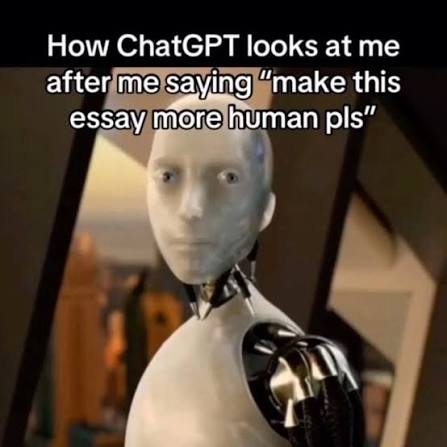
Enter Senorita GPT/Claude
Deep…sorry, AI calls to AI. So naturally, AI would select AI-generated entries as better. However, this does not explain how other human-written stories made it through the mesh.
The second possibility is that the readers and judges lack experience with AI or with reading AI works, and thus don’t know what it sounds like. If you haven’t read Tolkien or Tutuola, you probably would not know when a student passes off their (Tolkien’s or Tutuola’s) work as their own. You’d probably think the student has a firm grasp of world-building or an interesting approach to voice. In the same vein, if you haven’t read enough AI-generated work (I am resisting the urge to use the word ‘slop’. It’s such a human tell 😛), you probably would not recognize it when you see it on a page.
Away from the AI-tells and the off-with-their-heads cries from the literati, the primary problem is the quality of the writing. The writing, AI or not, was objectively bad. Beyond the distracting language, there was barely any plot, and the characters were oddly two-dimensional. So why was it selected?
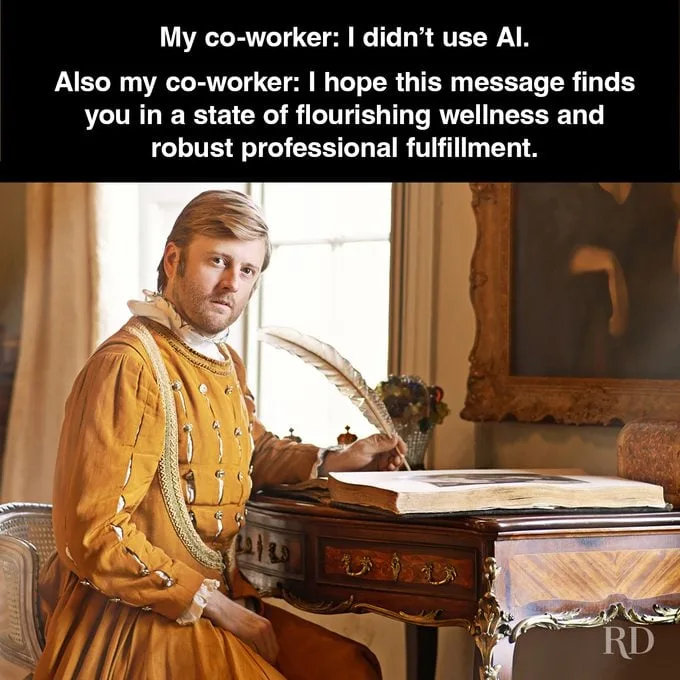
On the writer’s part, I believe this is the case of the older male family member with a stash of adult magazines under their bed.
Hear me out. In the late 2010s, movies always spotlighted an older male relative (father, uncle, older brother, or cousin) with a stash of adult magazines under their bed. They believed their hiding place was solid. What they did not know was that most times the younger members of the household were aware of the existence and location of said items—and when they were accessed.
To bring this home, the writer of The Serpent in the Grove is older. He probably wrote a delightful story and fed it into an LLM for ‘refinement.’ The output is the story on display today. On his screen, this was a pièce de résistance, and his actions, the perfect crime. However, the people who know know.
The second part of this has to do with the Dunning-Kruger effect. The Dunning-Kruger effect is a miscalibration of ability in which incompetent people overestimate their abilities. For the incompetent, this bias results from an illusory sense of superiority and a lack of self-awareness that prevents them from seeing their incompetence. In simple terms, incompetent people overrate themselves because they do not know enough about a subject to realize they are incompetent, and they are also unaware of their lack of knowledge. This dual phenomenon of not knowing enough and not being aware of this lack of knowledge is called the dual burden account.
A tool is only as good as its user. If the writer had a firmer grasp on the foundations of creative writing, the quality of the writing they submitted to the prize would be many levels above what we were presented with. They would have rewritten the ostentatious metaphors, anchored certain parts to reality, and made the characters more vivid and memorable.
One thing I will say is we can never know to what extent AI was used in the creation of a work (creation here does not refer to ideation and research, that is a whole other problem on its own). However, AI has literary fingerprints and an authorial voice that is quite easy to pick out. The sad thing is, it is everywhere now, from blog posts, tweets, novels, and articles to comments, WhatsApp BCs, and text messages. Yes, you heard right. Text messages! We can all agree that authenticity is what makes us unique. However, with AI and writing, it is currently a race to the creative bottom. In the pursuit of perfect expression, most writing sounds the same.
And don’t get me started on using AI to detect AI.
I cannot begin to describe how dystopian it is that we have to use AI to detect AI. That human writing—which in some cases was created long before AI—is flagged as AI-generated. And the solution? The same AI offers to humanize it.
The AI-writing style is on its way to becoming the current literary zeitgeist, and that’s what worries me. There is a penchant among young people to copy successful writers of the age. With AI-esque works winning the Commonwealth Writers’ Prize and the Harper’s Bazaar Short Story competition, I worry that many young writers might begin to copy that writing style. I strongly believe that exceptional human writing will continue to be celebrated. However, I foresee a future in which writers who produce exceptional work without using AI may still be accused of using it.
Away from the creative space, there are many concerning implications of AI:
- Medical professionals becoming worse at spotting tumors after three months of using an AI tool to screen for cancer.
- AI hallucinations, statistical guesswork, and fake citations, with lawyers submitting fake citations from ChatGPT and AI-generated mushroom foraging books sold on Amazon containing serious errors and recommending the consumption of protected or toxic species
- AI chatboxes encouraging young people to commit suicide
- Artists suing Google (YouTube) over using their music to train the Lyria AI 3 model
- Companies training AI on creative media belonging to unconsenting authors
- Wrongful immigration refusals in Canada caused by caseworkers using generative AI to review applications.
The list is endless.
The Way Forward?

AI is here to stay. So the best thing we can do is adjust to and collaborate with it while creating ethical frameworks around its use. From biases to heuristics, the human brain is a very efficient and ergonomic organ that prioritizes shortcuts over doing things the hard way. So when it encounters AI, it is easier for it to take the path of least resistance and outsource most things to AI.
However, for long-term brain health and memory function, you must resist this knee-jerk reaction.
To use AI in a way that doesn’t harm our cognitive abilities, problem-solving skills, and critical-thinking capacities, one should follow what Apostle Emmanuel Iren calls “contact without contamination,” using this technology in ways that are collaborative but do not compromise or contaminate one’s own strengths. Researchers refer to this as a ‘hybrid intelligence’ where AI works collaboratively—like an assistant—with humans. Instead of mortgaging our thinking to it, they recommend we do the thinking and the hard stuff ourselves and use AI tools as a ‘nemesis prompt’ to identify gaps in our thinking.
‘Technology, as it stands, is leading us toward a light, ‘hedonic’ kind of well-being full of quick thrills and simple delights…’
– Gloria Mark
Secondly, adopt a eudaemonic approach to your craft rather than a hedonistic one. Anything worth having—success, a fit body, a publication history, a healthy relationship—requires a bit of effort. Not labor or the drudgery associated with menial work, but rather passionate effort. A hedonistic approach to creativity prioritizes results by maximizing comfort and emphasizing pleasure and effortless action. This looks like using AI tools to generate an entire article or build a website from scratch, or always reading summaries instead of the actual book. Conversely, a eudaemonic approach to craft involves discipline, effortful action, and the realization that the process is its own reward and thus is as important as the product.
The eudaemonic approach to creativity is called ‘friction-maxxing’ in Gen Z parlance and focuses on doing things the ‘hard’ or ‘old school’ way. I like to think of this as the ‘from scratch’ approach to life. There’s nothing wrong with using pancake mix to make pancakes, but it is still important to learn how to make pancakes from scratch. Similarly, it is always better to do things the effortful way as often as you can. Besides making life more purposeful and meaningful, studies show that effortful approaches to tasks keep new neurons in the brain alive and preserve cognitive function as we age.
‘A good life isn’t an easy life. There’s an enjoyment you’re cheated out of when you take the easy route….’
Learn the basics and the fundamentals. It might frustrate and drive you mental sometimes, but there’s still fun to be had in the process. Anything built on a shaky or non-existent foundation collapses. So, if you want to make a website, write a book, or create art, learn the foundations of the subject before using AI. Use AI to create a structured scheme of work for learning the rudiments of web development, color theory, the three-act structure, and world-building. Afterward, use AI collaboratively to build on that knowledge.
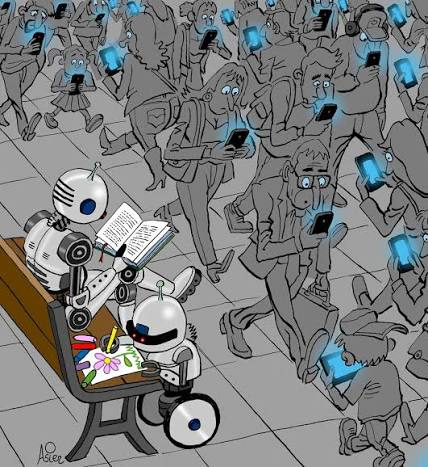
I once heard a thought leader liken AI to a toddler. It is still learning and developing skills that take humans a lifetime to perfect. However, (no) thanks to the theory of compounding, AI would perfect those skills in a fraction of that time. The only way to stay relevant is to keep learning, unlearning, and perfecting extant skills.
Finally, I want to end by reaffirming that humanity is not a flaw. I see people brandishing AI tools and warning others that their skills will soon be obsolete, that AI is more efficient at tasks creatives have spent years honing and perfecting. The answer is not cut-and-dried. Yes, AI is efficient, but that doesn’t mean it is better or will supersede humans at handling creative tasks. The supposed weaknesses and frailties of humanity add texture to life and creative output. Rumi puts it beautifully when he says, ‘The wound is where the light enters you.’ Our weaknesses, trauma, experiences, and frailties are precisely what make our art unforgettable, compelling, and visceral.
And studies back this up.
One study shows that AI models ‘strip away one of the defining traits of memorable fiction: mystery.’ According to Anneliese Brei, the lead researcher, the models:
- Aggressively resolve internal conflicts
- Answer every mystery
- Ensure characters fit into tidy molds, making them flat and archetypal
Conversely, human writers:
- Embrace chaos and the unresolved in their fictitious worlds
- Leave room for morally gray characters
- Craft narratives that are open to interpretation, the exact structural ambiguity that makes a story stick with a reader.
- The study ends with a warning to authors using AI as a brainstorming tool: ‘letting a machine dictate character development risks homogenizing the narrative, making a human touch essential to reintroduce contradiction, subvert expectations, and deliberately inject uncertainty…’
Chimamanda Adichie’s Half of a Yellow Sun is memorable for many reasons, one of which is the mystery of Kainene. Yann Martel’s Life of Pi is an unforgettable read because Pi Patel tells two versions of the same story, and the novel never confirms which is true. Mystery, ambiguity, moral mirages, situational sleights of hand. All these are very human additions that make for standout creative output. To drive home the importance of the human in the creative, I leave you with some words from Pope Leo XIV’s Magnificat Humanitas:
…We must, then, avoid the “Babel syndrome,” namely the idolatry of profit that sacrifices the weak, a uniformity that neutralizes differences, and the pretense that a single language — even a digital one — can translate everything, including the mystery of the person, into data and performance. The risk of dehumanization — of building a future that excludes God and reduces the other to a means — is an ancient and ever-new temptation that today takes on a technical guise.
Instead, let us choose the “way of Nehemiah,” which highlights the importance of working together to make the City of God a safe place for returning exiles. Rebuilding today means recognizing that, precisely from the plurality of voices and visions which, even though they sometimes remind us of the confusion caused by the diversity of spoken languages, a bright possibility emerges….building for the common good means accepting the limits and weaknesses of humanity without considering them an error to be corrected.
Today, the human desire for fullness of life is at risk of being misled by deceitful goals, such as the prospect of a technology that promises to free us from all weakness, and models of wellbeing that leave behind entire populations. All too often, we place our hope in unlimited “upgrades,” in forms of progress that exacerbate inequalities, and in immediate solutions incapable of healing people’s wounds. As a result, while some pursue the illusion of unlimited self-assertion, many are deprived of basic necessities.
The Church reminds us, with a firm yet humble voice, that true fulfillment is not achieved by eliminating weakness but through harmonious growth. It is found where freedom and responsibility are intertwined with mutual care and true solidarity, and where progress is measured by the dignity of each person and the good of all peoples…No one can single-handedly bear the weight of the challenges the world is facing, just as no one is so weak that they cannot play their part, for “power is made perfect in weakness” (2 Cor 12:9).
All are given their own section of the wall: scientists and researchers, entrepreneurs and workers, educators and legislators, civil society, popular movements and faith communities. This is the logic of subsidiarity, which values the cooperation between generations, peoples, disciplines and cultures as the best way for fostering stability, prosperity and peace. Tensions or differences should not intimidate us because they can become creative forces when guided by shared responsibility…’
—Pope Leo XIV’s Magnificat Humanitas (10, 12, 13)
Hi lovelies. It’s been a minute. I haven’t been writing on here because most of what I felt I had to say, I have been putting into my fiction (click here to read my latest one). But that’s about to change. There are a few topics that have been burning my throat (fingers?), and I intend to speak (write?) on them each week.
Recently, I have had Peace and Violence, a song from Faouzia’s Film Noir album, on repeat. I went to her concert earlier in the week, and it was eargasmic! Baby girl is hands down one of the best vocalists of our time. Faouzia is one songstress who knows how to turn love into an explosive landmark event, and I believe everyone should listen to at least one of her albums. Click here to listen to her latest album, and here to listen to one of my favorite Faouzia songs.
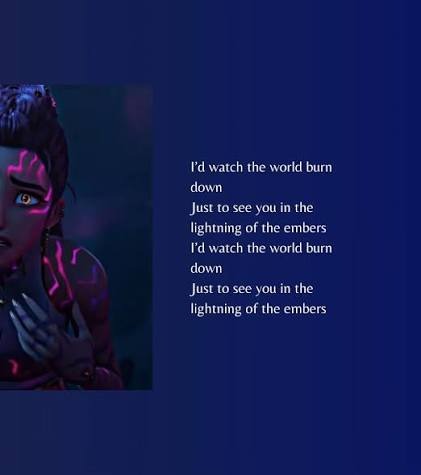
Send this post (and this song) to someone for whom your heart burns.